Mike Hohnen

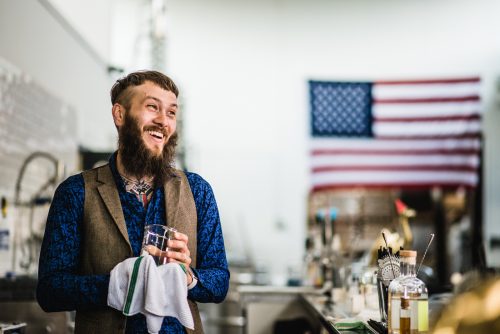
Mike has his own unique style. He draws on more than 27 years experience. He has worked most positions in the service industry and feels at home in more major cities than most people.

Mike Hohnen

Archive for the category 'Foodservice'

Implementing the Service Profit Chain

My new book has now been published !


Inspired by the principles developed in the “Service Profit Chain”, Mike Hohnen takes you through each of the steps needed to create an outstanding service business.

You will find it here on Amazon

Best!


We live in a world of abundance – there is plenty of choice everywhere. And since 2008 we have experienced significant drops in demand as consumers became more careful. The result is a widening gap between supply and demand in virtually any category you can imagine.
When that happens, many companies have a knee-jerk reaction, and the recipe is more or less always the same: initiate rigorous cost-cutting programs, reduce staff and/or services, offer discounts in many forms, and increase advertising aggressively.
This, however, is the equivalent of trying to steer and brake as your car begins to skid on black ice while going through a sharp curve.
As you hit that declining demand curve, you need to perform what at first seems like a counterintuitive move: hold your price, increase your services, improve your quality, and narrow your focus in the market.
In this book, you will not only understand why but also see how you can do that.

D’Espresso – New York

From the coolhunter:

The new D’Espresso on Madison Avenue (at 42nd) in New York has received more media attention than is generally awarded to a tiny coffee shop in this world of millions of new coffee shops.

The reason for the attention is the fun design by the Manhattan-based nemaworkshop, a team of designers and architects that has created numerous cool retail and hospitality concepts. Founder Anurag Nema took the idea of a coffee shop that looks like a library – giving a nod to the nearby New York Public Library’s Bryant park branch – and turned it on its side. The walls are not lined with books but the floors and ceiling are. Except that it is all an illusion, a life-size image of books printed on custom tiles. Pendant lighting does not hang from the ceiling; it sticks out from the walls.

See the photos here D’Espresso

This one is for restaurants – and their guests…

Presented by Online Education
The Facts About Bottled Water

Creative Foodies… in the USA

The 10 Most Creative People in Food

The Magazine FastCompnay has launched a series on the 100 most creative business profiles. Here is their take on who are the top 10 creative Foodies.

1. Jean-Georges Vongerichten, Jean-Georges Management
The Alsace-born celebrity chef has built a multimillion-dollar, multi-Michelin-starred empire without slapping his face on a frying pan or frozen pizza. Vongerichten’s unprecedented partnership with Starwood Hotels has given him license to unleash his creativity — and his take on Asian flavors — in 50 new restaurants over the next five years. “If I could have my dream,” he has said, “I would open a new restaurant every month.”

2. Dan Barber, Blue Hill restaurants
Barber is foodies’ latest locavore darling, the driving spirit behind the two acclaimed Blue Hill restaurants, and a passionate advocate for regional farm networks. The winner of the 2009 Outstanding Chef award from the James Beard Foundation, he practices what he preaches at his family’s farm and at the nonprofit Stone Barns Center for Food and Agriculture.

3. Will Allen, Growing Power
Since he used his life savings to buy the last working farm in Milwaukee, Allen has been dedicated to creating a more just food system. Growing Power’s network of urban teaching farms raises vegetables, fish, livestock, and honeybees; supplies local restaurants; creates sustainable cafeteria programs for corporations; and distributes food to more than 100,000 families. “We’re not just growing food, we’re growing people too,” he says.

4. Dan Cutforth and Jane Lispitz, Magical Elves Productions
Top Chef creators and executive producers Cutforth and Lispitz –”the elves,” as they’re known – have used reality television, of all things, to lift up serious cooking rather than reduce it to farce (we’re looking at you, Gordon Ramsey). In the process, Top Chef has become a pillar of the Bravo network’s urban-sophisticate strategy, spawning a popular Web site, cookbooks, and merchandise — making it an example of the 21st century integrated media brand.

5. Floyd Zaiger, Zaiger Genetics
The father of the pluot, 83-year-old Zaiger, has developed — by hand pollination, not genetic manipulation — some 200 new and improved fruits, from low-acid peaches to cherries that grow in warm climates to the golden red apricot-plum cross known as an aprium. “Developing a new cross takes 12 to 15 years,” says Zaiger’s daughter, Leith Gardner. “You need a little patience.” Coming next: a blue-skinned aprium.

6. Ed Kaczmarek, Kraft
Pay for an ad? Only if it’s extra cheesy. Director of innovation Kaczmarek’s Kraft iFood Assistant, which offers Kraft devotees with iPhones, thousands of recipes and more, proves not only that brands can create meaningful mobile experiences but also that customers will pay for them. Kraft’s cooking app ($0.99) cracked the iPhone’s top 100 apps list, rising at one point to the No. 2 slot in the lifestyle section, and helped the $42 billion company better understand its customers and what they’re shopping for.

7. Temple Grandin, Associate professor, Colorado State University
“There are similarities between my autistic mind and animal thinking,” Grandin says. The Woman Who Thinks Like a Cow, the title of her video bio on YouTube, has relied on that understanding to develop more humane ways of treating cattle destined for slaughter. She has no fans in the animal-rights blogosphere, but the walled, curved chutes she has designed and the handling standards she has set up for companies like Swift and McDonald’s — no flapping objects, no shadows, no spraying in the face — reduce stress in the animals and improve the efficiency of the operation as well as the quality of the meat.

8. Becky Frankiewicz, VP of portfolio marketing for Frito-Lay North America
Who says good for you has to mean “tastes like cardboard”? Frankiewicz is leading the shift for Frito-Lay’s Smartfood and Baked Lays brands to appeal to women, using design and taste to communicate that healthy snacking isn’t an oxymoron. New packaging is more elegant, appealing, and signals health benefits, and new technology lets flavor be baked into each crisp.

9. Jeff Jordan, CEO of OpenTable
Jordan, an eBay vet, has helped make restaurant reservations fun, adding features such as detailed users reviews and clever lists to help restaurant fans make better decisions in the same place they make their reservations. Perhaps his neatest trick has been to take OpenTable public in the current market climate — and get a 1999-style response. OpenTable stock hit a high of $35.50 on its opening day in late May, a nice bump from its initial price of $20 a share.

10. David Chang, Momofuku
The intense, award-winning chef launched his quirky downtown Manhattan mini-kingdom with inventive takes on Asian noodles and pork buns. Besides producing great food, Chang hits all the stylish notes — local produce, cool staff, lots and lots of pork. Plus, his latest (and priciest) venture, Ko, is the only restaurant we know that takes reservations only online.

Read more about the 100 Most Creative People in Business

Fra virtuel til virkelighed

[lang_da]Jeg har holdt tæt øje med udviklingen af virtuelle, sociale netværk i et stykke tid nu. I den proces er jeg blevet overbevist om, at det på et tidspunkt vil flytte sig igen fra virtuel til virkelighed – læs den fulde artikel, som jeg har skrevet for Visitor om dette emne her.

Jeg vil ikke bruge ‘K-ordet’, så lad os bare blive enige om, at markedstilstandene varierer, og at betingelserne for vores livsform er under forandring.En af de positive konsekvenser er præcis det, at vi bevæger os fra virtuelle til virkelige netværk – og hovedkraften bag denne tendens er Generation Y.

Generation Y elsker de markante statements og at finde en større mening i tingene. Blandt andre kæden Starbucks har fået øjenene op for de muligheder, det giver. Prøv engang at se her:

Da jeg sidst besøgte deres website, var de langt over målet på løfter om 100 timers frivilligt arbejde fra de unge – godt gjort! Nu kommer så den mere tricky del af konceptet. Jeg vil gerne se, hvordan det udvikler sig. Bliver arbejdet lavet og bliver konceptet en succes, eller vil det langsomt dø ud?

På mange måder viser Starbucks vejen her. Jeg er sikker på, at andre restauranter og cafeer kan udvikle sig til lokale netværkssteder. Mulighederne er uendelige: Fra at være værter for café-workshops, give løsninger på dagligdags problemer – til at give tips om jobsøgning, osv. Eller hvad med være vært for en madlavningsession for de unge, som gerne vil spare penge på madbudgettet – måske endda opfordre dem til gøre det til jævnlige, fælles aktiviteter og derigennem skabe et socialt netværk – det kan give så meget mere end et par indlæg på facebook.

Første step er at få de lange fællesborde tilbage i cafeerne, hænge en opslagstavle op og se, hvad der sker…[/lang_da]

[lang_en]I have been watching and trying to learn the ropes of virtual social networking for a while now. In the process I have become convinced that this must some how eventually spill over from virtual to real.

I don’t what to use the “R” word so let just say that market conditions fluctuate and we seem to be in a change phase ;-) One of the positive things that may come out of that is exactly this move from virtual to real networking – and the main driver of this will be Gen-Y.

Gen-Why loves a big calling and a big hairy purpose – and Starbuck’s has seen the opportunity in this. Take a look at this:

When I last checked their website they were well beyond their goal of over a million hours pledged. Well done – now comes the tricky part execution. I for one will be watching how they get that going. Will they build on this and actually cash in the pledges or will it fade out?

But in many ways Starbuck’s is showing the way here.
I am sure that other restaurants and cafes could develop themselves as local networking hubs and in the process keep their turnover from sliding the wrong way.

The possibilities are endless: from hosting cafe workshops or finding solutions to everyday problems, tips on job hunting. Or how about hosting a cooking class for those youngsters that would like to save a few bucks on their food budget (and stay healthy at the same time) by cooking some real food themselves, maybe even encourage them to do it as communal effort – it could become a diner network – and that could be a lot more rewarding than a few posts on facebook.

The first step is to bring back in the communal tables and hang up a message board and see what happens…[/lang_da].