• Skip to main content
  • Skip to primary sidebar

Mike Hohnen

Coaching for personal growth, change and development

  • ABOUT
  • SERVICES
  • LIBRARY
  • COURSES
  • LOGIN
  • BLOG

Mike Hohnen

The Leadership Connection Paradox

December 25, 2024By Mike Hohnen

I had a coaching conversation with a junior leader recently that got me thinking. “The higher up they go,” she said, “the more transactional our leaders become.”

What struck me wasn’t just the observation itself, but the irony it revealed: Almost every leader I work with craves more meaningful connection with their own boss. Yet somehow, in the daily rush of organizational life, many fail to translate this very human need into their own leadership practice.

It’s not about “bad” leaders. It’s about good people caught in a cycle of pressure and task-focus, losing sight of what they themselves most desire – real connection and dialogue.

The most effective leaders I encounter are those who’ve found their way out of this trap. 

What sets them apart isn’t a special technique or management philosophy. It’s their comfort with their own role, a true sense of caring, and their liberation from the need to prove their worth through an endless stream of completed tasks.

The research is clear: command-and-control leadership isn’t the most effective approach. But knowledge isn’t enough. The real challenge lies in bridging the knowing-doing gap – in remembering, amid the pressures of leadership, that the connection we crave is exactly what our teams need from us.

What would change in your organization if leaders at every level focused as much on building relationships as they do on managing tasks?

#leadership #connectionbeforcontent 

Filed Under: General

The Myth of Top-Down Change: Finding Power in Conversations

January 14, 2025By Mike Hohnen

We often hear that meaningful organisational change must start from the top. “Leadership needs to set the tone,” they say. But history tells us a different story.

Think about major societal transformations – from the Arab Spring to the Civil Rights Movement. Those in power didn’t initiate these. They started with conversations between ordinary people who dared to imagine something different.

Yet in organisations, I often hear: “I can’t do anything about that – it has to come from management.” This learned helplessness is fascinating because it contradicts what we know about how change actually happens in complex systems.

The truth is that transformation often begins with simple conversations. Two or three people start talking about what could be better – not through complaints or blame, but through genuine dialogue about possibilities. These conversations become the seeds of change.

These aren’t your typical water cooler venting sessions. Effective change conversations require us to step out of what psychologists call the Drama Triangle – where we cast ourselves as Victims, others as Persecutors, and wait for Rescuers to save us. Instead, they’re conversations where people claim their agency and explore what they can influence, however small it might seem.

Next time you find yourself thinking, “Someone should do something about this,” remember: You’re not powerless. Find a colleague. Start a conversation. Ask, “What could we start doing differently?” History shows us that profound change often starts with just that – people at any level choosing to have different kinds of conversations.

The question isn’t whether you have enough authority to create change. The question is: What conversations are you willing to start?

#Leadership #OrganizationalChange #Empowerment #WorkplaceCulture #ChangeManagement

Filed Under: General

The Great Storytelling Obsession (And What We’re Missing)

December 25, 2024By Mike Hohnen

Everywhere you turn these days, someone’s selling the secret sauce of storytelling. ‘Transform your brand!’ ‘Captivate your audience!’ ‘Master the art of narrative!’

The ironic part is that you’re already a master storyteller. In fact, you’re telling stories right now, even as you read this.

You see, your life isn’t just a collection of random events – it’s an ongoing narrative you’re constantly writing and editing. That tense meeting yesterday? You’ve already crafted a story about what it meant. That disagreement with your partner? There’s a narrative forming around it, complete with character motivations and plot twists.

These stories aren’t just idle mental chatter. They’re the scaffolding of meaning in our lives. They shape how we interpret everything from a colleague’s casual remark to a major career setback.

Think about your 2024 story so far. What’s the genre? Is it a tale of resilience? A comedy of errors? A drama of unfulfilled potential?

But, you’re not just the protagonist – you’re also the author. And authors have choices.

Take that challenging project you’re facing. Is it the story of an insurmountable obstacle, or the opening chapter of your greatest professional triumph? 

That team member who keeps pushing back – are they the antagonist in your story, or a character bringing valuable contrast and growth to your narrative?

The magic happens when you realize you can reframe these stories:

‘This is the end’ becomes ‘This is the beginning’

‘This is happening to me’ transforms into ‘This is happening for me’

‘This is a crisis’ shifts to ‘This is an opportunity”

The reframing changes the meaning – and meaning is the fuel that drives our motivation.

So your life story isn’t set in stone. It’s more like a real-time draft, constantly being revised and rewritten. The question isn’t whether you can tell a good story – you already do that naturally. The real question is: what story are you telling yourself, and is it serving the life you want to create?

So as this year come to an end And  you look ahead to the chapters yet to come, what story would you like to tell? 

More importantly, what story would you like to live?

Happy new year!

Filed Under: General

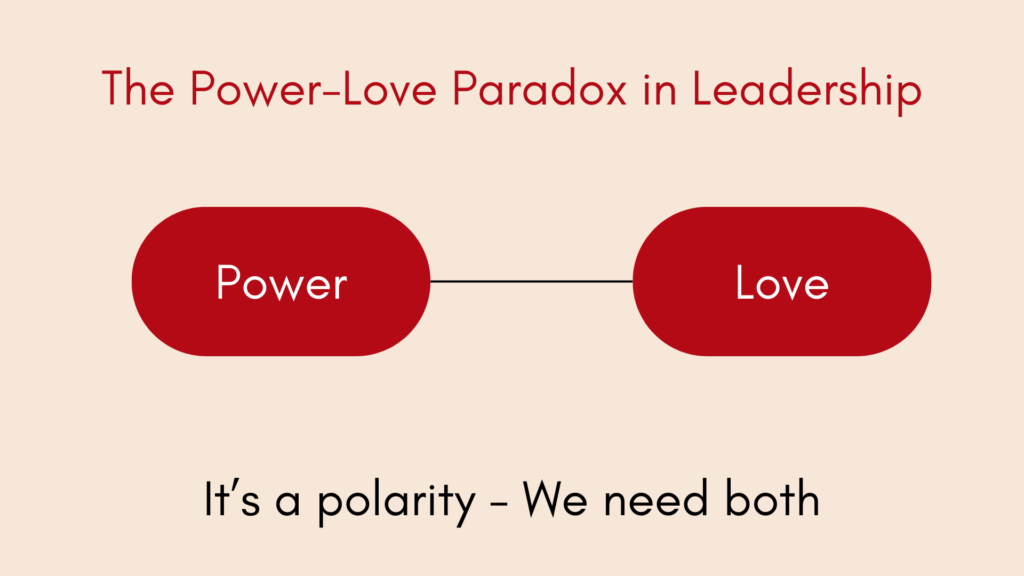
The Power-Love Paradox in Leadership: Why Being “Nice” Isn’t Enough

December 13, 2024By Mike Hohnen

Ever noticed how some leaders swing between being too harsh and too soft?

I repeatedly see this pattern when working with organizations implementing the Service Profit Chain. Leaders eager to boost employee satisfaction suddenly become reluctant to lead. They stop setting standards, being directive, and managing.

Their hearts are in the right place—they don’t want to damage the employee satisfaction they’ve worked so hard to build.

But here’s the twist: This approach backfires spectacularly.

Without clear direction, teams drift, service quality drops, and customer satisfaction plummets. Then comes the devastating conclusion: “See? Creating a great workplace doesn’t work.”

The real issue is that these leaders are missing a fundamental truth: Power and Love aren’t opposites—they’re complementary forces.

Think about it: Just feeling good but achieving nothing? That’s not satisfaction. That’s stagnation.

The magic happens when you blend both:

  • First, build the foundation of trust and belonging (Love)
  • Then, raise the bar with clear standards and expectations (Power)

When done in this order, something remarkable occurs. Instead of resistance, you get engagement. Instead of compliance, you get commitment.

Why? People don’t just want to feel good; they want to achieve something meaningful. They want to grow, contribute, and excel.

Martin Luther King Jr. captured this perfectly: “Power without love is reckless and abusive, and love without power is sentimental and anaemic.”

So next time you’re tempted to choose between being supportive or demanding, remember that it’s not either/or. It’s both/and.

Your team deserves nothing less.

#Leadership #EmployeeEngagement #ServiceProfitChain #ManagementTips #OrganizationalDevelopment

Filed Under: General

When Nothing Becomes Something: The Hidden Cost of Management Inaction

November 4, 2024By Mike Hohnen

Picture a perfectly ripe peach on your desk. 

It’s beautiful, fragrant. After a few days, tiny spots start to appear. A few days later, when you finally think about enjoying that peach, it’s mushy, spotted, and crawling with fruit flies.

Leadership failure rarely announces itself with dramatic mistakes. More often, it creeps in through quiet inaction – those small moments when we choose to “wait and see” instead of engage.

– We see the team member struggling with a project but tell ourselves they’ll figure it out. 
– We notice communication gaps widening but convince ourselves they’ll naturally resolve. 
– We observe declining engagement but hope it’s just a phase.

Potential rots silently. 

By the time the symptoms become impossible to ignore, the damage requires far more intervention than a simple, early conversation would have.

Great leadership isn’t just about avoiding wrong decisions – it’s about making the right ones at the right time. It’s about having those uncomfortable conversations when they’re merely uncomfortable, not yet critical. It’s about addressing small performance gaps before they become chasms.

Ask yourself: 
What conversations am I avoiding today that I’ll wish I had yesterday? 
What small issues am I hoping will resolve themselves?

#Leadership #Management #PersonalDevelopment #ProfessionalGrowth

Filed Under: General

Key Elements and Differences of the Service Profit Chain

September 27, 2024By Mike Hohnen

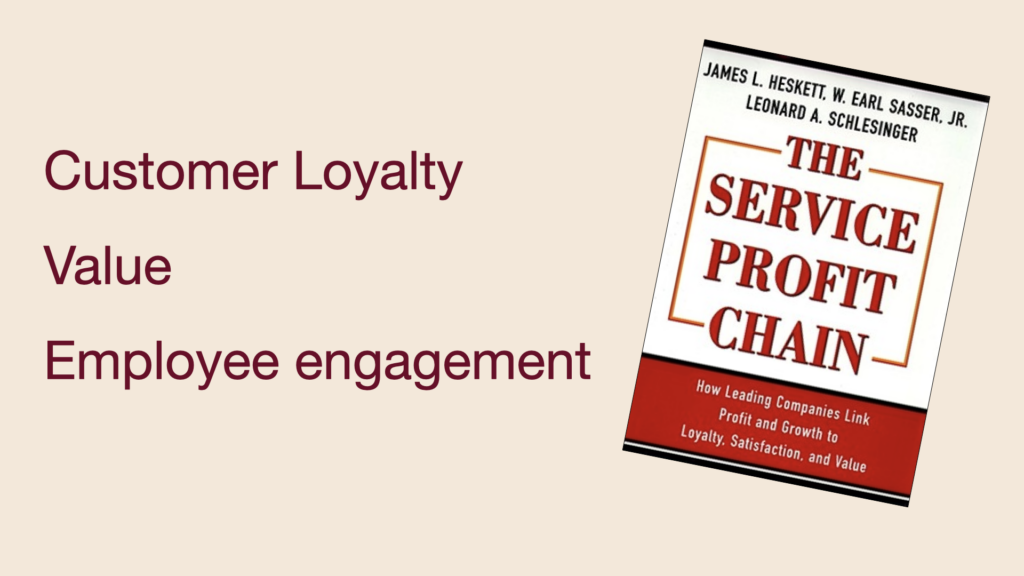
The Service Profit Chain (SPC) is a management philosophy that links profitability and growth directly to customer loyalty, customer satisfaction, and employee satisfaction. [1] It differs from traditional management theory, which often focuses on inward, product-centric models, by emphasizing an outside-in, customer-centric approach. [2, 3]

THE SERVICE PROFIT CHAIN

Here are the key elements of the SPC and how they differ from traditional management theory:

  • Customer Loyalty: The SPC identifies customer loyalty as the most critical driver of profits and growth, particularly through the “ambassador effect” where loyal customers recommend a business to others. [1, 4, 5] This contrasts with the traditional emphasis on market share as the primary profit driver. [4]
  • Customer Satisfaction: The SPC stresses that mere customer satisfaction is not enough for loyalty. Instead, it highlights the importance of exceeding customer expectations and creating “enthusiasm” to foster genuine loyalty. [6, 7]
  • Value Creation: The SPC emphasizes the need to understand and deliver value from the customer’s perspective. [8] It challenges the traditional “core service with peripheral offerings” model, which often leads to increased costs and a disconnect between what businesses offer and what customers truly value. [3, 9, 10]
  • Employee Capability: The SPC emphasizes the need for continuous employee training and development to ensure they possess the knowledge and skills necessary to deliver exceptional customer experiences and adapt to changing customer needs. [11, 12]
  • Employee Loyalty: The SPC recognizes that enthusiastic employees are essential for creating enthusiastic customers. [13] It stresses the importance of fostering employee loyalty through trust, pride in their work, and a shared sense of purpose. [14] This focus on employee well-being and motivation contrasts with traditional management approaches that may prioritize efficiency and cost-cutting over employee morale.

The SPC model encourages businesses to invest in their employees and empower them to make decisions that benefit both the customer and the company. [15, 16] This approach fosters a culture of service excellence, where employees are motivated to go above and beyond to ensure customer satisfaction. [17, 18]

As explained in my book Best!

Filed Under: General

Navigating the Headwinds: Three Major Challenges in Today’s Service Industry

September 10, 2024By Mike Hohnen

Running a hospitality business today can feel like pedalling a water bike against a strong headwind—lots of effort, not much progress. This struggle persists despite customers seemingly desperate for anything that makes their lives easier or more fun, preferably both. So, what’s causing this resistance?

The Three Mega Trends Creating Headwinds

1. Abundance

We live in a world of abundance, with an oversupply in virtually every market segment. Since the scarcity years following World War II, we’ve experienced a steady increase in offerings that far outstrips demand. While more customers seek great service, the increase in demand hasn’t kept pace with the explosion in supply.

What it means: We’re all part of a hyper-competitive environment. As businesses shout louder to attract attention, the noise drowns out everyone. The internet has made communication easier than ever, but being heard has never been more challenging.

The loyalty factor: In this environment, customer loyalty is pure gold. Loyal customers recommend us to their friends, possibly the only sustainable source of new business we have.

2. Service-Dominant Logic

The much-talked-about “coming of the service economy” is no longer approaching—it’s here. What makes this challenging for traditional service providers is the entry of new players who invent novel services and raise the bar, creating more refined offerings than the old economy ever dreamed of.

What it means: The kind of service you provided in the past probably won’t cut it in the future. Being in a hyper-competitive market only amplifies this challenge.

3. Lack of Engagement

The situation is further aggravated by widespread disengagement in the workforce. Year after year, Gallup surveys show that the vast majority of employees are not particularly engaged in their jobs.

What it means: While low engagement might be tolerable in some industries, it’s critical in service businesses. There’s a world of difference between being served by someone who merely has a job and someone who is truly engaged. This difference often translates directly to customer loyalty.

Facing the Headwind

Despite these challenges, some service businesses seem to have found the secret sauce—not only are they untroubled by the headwind, they’re thriving. How do they do it?

The answer lies in successfully implementing the principles of the Service Profit Chain—a framework that establishes clear connections between customers, loyalty, value creation, and employee engagement. While it’s not always easy to get started, once you do, you’ll experience a flywheel effect, slowly but surely building momentum until you become unstoppable.

Does this sound too good to be true? It’s not. There are numerous examples of extremely successful service businesses that have done exactly this.

By understanding and addressing these three major challenges—abundance, the shift to service-dominant logic, and the engagement crisis—you can transform your business and make the much sought after transformation from good to great.

When is the best time to start addressing these challenges and implementing the Service Profit Chain in your business?

It’s like the wisdom about retirement savings: the best time would have been 5 years ago, but the next best time is today. Every day that passes is a missed opportunity to start building that flywheel effect.

Learn more here

Filed Under: General

10 spots, 50 minutes, countless insights

August 1, 2024By Mike Hohnen

I’m offering something rare these days: live human interaction.

No chatbots. No algorithms.  No prerecorded webinars running in infinite loops.

And NO SALES pitch. You have my word.

Just you, me, and a few other leaders working together to level up our skills.

Welcome to my Growth Workshops.

What makes these different?

  • It’s really me. Not an AI pretending to be me.
  • My perspective on an important topic
  • Live interaction. Ask questions, get real-time answers.
  • Small groups. Only 10 spots per session.
  • Tailored advice. Because your challenges are unique.

Twice a month, for 50 focused minutes, We’ll tackle a real leadership issue, share experiences, and develop practical strategies you can use right away.

And it’s completely free.

Why am I doing this?

I like going against the stream, always have – they go AI I go live ;-)

No, seriously, I want to give you the opportunity to sample what it is like to work with me. I believe in the power of human connection. In learning from each other. In the magic that happens when minds meet in real-time. The power of thoughtful conversations.

And who knows, maybe that will also make a tiny contribution to a better world. I would like that

Check out the workshop details and grab your spot before we fill the last seats

Hope to see you there

Mike

PS Please share if you know someone who might enjoy participating

#growth #leadership #development

Filed Under: General

  • « Go to Previous Page
  • Page 1
  • Page 2
  • Page 3
  • Page 4
  • Page 5
  • Interim pages omitted …
  • Page 101
  • Go to Next Page »

Primary Sidebar

Search here

The Legal Stuff

Terms & Conditions

Privacy Policy

© Copyright 2025 Thoughts4Action cc - Privacy Policy - Terms & Conditions

All your work challenges are really relationship challenges

Get fresh perspectives and practical wisdom on building authentic professional relationships that make your life easier.

Join my newsletter list here (published once a month)